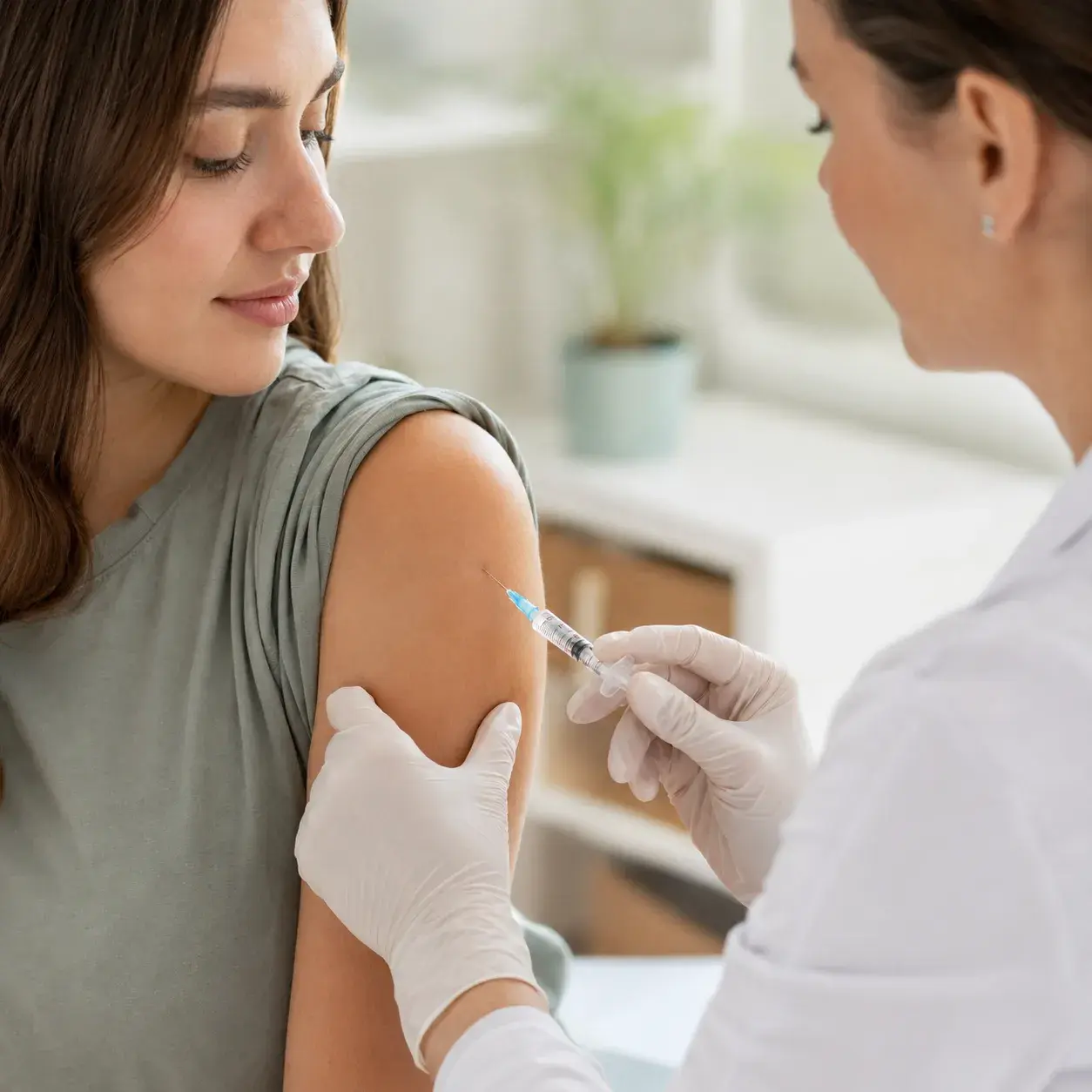
Vaccination against human papillomavirus (HPV) is not simply “another vaccine.” It is an effective way to protect your health and the health of your loved ones for years to come.
HPV is a very common virus, most often transmitted through intimate skin-to-skin and sexual contact. Some high-risk types can persist in the body for years and may contribute to the development of cervical, vaginal, vulvar, anal, penile and oropharyngeal cancers. HPV can also cause genital warts.
Why is HPV vaccination important?
Persistent infection with high-risk HPV types is the main cause of cervical cancer. Vaccination is one of the most effective ways to prevent HPV-related disease before infection occurs.
The vaccine is relevant for both women and men. Boys and men can carry HPV and may also develop HPV-related cancers or genital warts. Vaccinating all eligible people helps reduce the spread of the virus.
Modern HPV vaccines have been used internationally for many years and have a well-established safety profile. They are highly effective at preventing infections and precancerous conditions associated with the HPV types covered by the vaccine, especially when vaccination is completed before exposure to the virus.
The best time for vaccination is before sexual activity begins, when the body has not yet encountered HPV.
Who should be vaccinated?
Children and adolescents
Vaccination is generally recommended for girls and boys from the age of 9. The optimal age is usually 9–14 years, as the immune response is strongest and the likelihood of previous exposure to HPV is minimal.
For most children who begin vaccination before the age of 15, the course consists of two doses given 6–12 months apart.
Catch-up vaccination
Vaccination may also be recommended for adolescents and adults who have not previously completed the course.
For people who begin vaccination at the age of 15 or older, a three-dose schedule is commonly used. The exact schedule depends on the vaccine and individual medical circumstances.
Adults aged 27–45 may also benefit from vaccination in some cases. This should be discussed individually with a doctor, taking into account medical history, previous vaccination and personal risk factors.
Which vaccines are available?
The specific vaccine available may vary depending on the country and clinic. Different vaccines protect against different HPV types, including the high-risk types most commonly associated with cervical cancer.
Your doctor will help you choose the appropriate vaccine and schedule.
Is revaccination necessary?
According to current evidence, protection after a complete HPV vaccination course is long-lasting. Booster doses are not routinely recommended at this time.
However, vaccination recommendations may be updated as new data becomes available, so it is always worth confirming the current guidance with your doctor.
Important information before vaccination
How is HPV transmitted?
Sexual and intimate contact
This is the main route of transmission. HPV can be passed through vaginal, anal or oral sex, as well as through close skin-to-skin contact in the genital area. Transmission is possible even without penetration.
Condoms reduce the risk of HPV transmission but do not provide complete protection, as the virus may be present on skin not covered by a condom.
Mother-to-child transmission
In rare cases, HPV can be transmitted from mother to child during childbirth. This may lead to recurrent respiratory papillomatosis, a condition in which papillomas develop in the airways.
Key facts about HPV
My recommendation as a doctor
If you have children, especially teenagers, do not miss the opportunity to discuss HPV vaccination before sexual activity begins.
If you are an adult and would like to understand whether vaccination may still be beneficial for you, book a consultation. Together, we can discuss your individual situation and choose the most appropriate approach to prevention.
HPV is a very common virus, most often transmitted through intimate skin-to-skin and sexual contact. Some high-risk types can persist in the body for years and may contribute to the development of cervical, vaginal, vulvar, anal, penile and oropharyngeal cancers. HPV can also cause genital warts.
Why is HPV vaccination important?
Persistent infection with high-risk HPV types is the main cause of cervical cancer. Vaccination is one of the most effective ways to prevent HPV-related disease before infection occurs.
The vaccine is relevant for both women and men. Boys and men can carry HPV and may also develop HPV-related cancers or genital warts. Vaccinating all eligible people helps reduce the spread of the virus.
Modern HPV vaccines have been used internationally for many years and have a well-established safety profile. They are highly effective at preventing infections and precancerous conditions associated with the HPV types covered by the vaccine, especially when vaccination is completed before exposure to the virus.
The best time for vaccination is before sexual activity begins, when the body has not yet encountered HPV.
Who should be vaccinated?
Children and adolescents
Vaccination is generally recommended for girls and boys from the age of 9. The optimal age is usually 9–14 years, as the immune response is strongest and the likelihood of previous exposure to HPV is minimal.
For most children who begin vaccination before the age of 15, the course consists of two doses given 6–12 months apart.
Catch-up vaccination
Vaccination may also be recommended for adolescents and adults who have not previously completed the course.
For people who begin vaccination at the age of 15 or older, a three-dose schedule is commonly used. The exact schedule depends on the vaccine and individual medical circumstances.
Adults aged 27–45 may also benefit from vaccination in some cases. This should be discussed individually with a doctor, taking into account medical history, previous vaccination and personal risk factors.
Which vaccines are available?
The specific vaccine available may vary depending on the country and clinic. Different vaccines protect against different HPV types, including the high-risk types most commonly associated with cervical cancer.
Your doctor will help you choose the appropriate vaccine and schedule.
Is revaccination necessary?
According to current evidence, protection after a complete HPV vaccination course is long-lasting. Booster doses are not routinely recommended at this time.
However, vaccination recommendations may be updated as new data becomes available, so it is always worth confirming the current guidance with your doctor.
Important information before vaccination
- HPV vaccination does not replace regular cervical screening, including Pap tests and HPV tests.
- Vaccination and screening work together: vaccination helps prevent infection, while screening can detect changes at an early and treatable stage.
- If one HPV type has already been detected, vaccination may still protect against other types covered by the vaccine.
- Routine HPV testing is not usually required before vaccination.
- HPV vaccination prevents new infections but does not treat an existing HPV infection or HPV-related disease.
How is HPV transmitted?
Sexual and intimate contact
This is the main route of transmission. HPV can be passed through vaginal, anal or oral sex, as well as through close skin-to-skin contact in the genital area. Transmission is possible even without penetration.
Condoms reduce the risk of HPV transmission but do not provide complete protection, as the virus may be present on skin not covered by a condom.
Mother-to-child transmission
In rare cases, HPV can be transmitted from mother to child during childbirth. This may lead to recurrent respiratory papillomatosis, a condition in which papillomas develop in the airways.
Key facts about HPV
- HPV is very common. Most sexually active people encounter it at some point in their lives.
- The infection often causes no symptoms, so a person may not know they carry the virus.
- HPV is mainly transmitted through intimate skin-to-skin or mucosal contact.
- HPV is not spread through blood or airborne droplets.
My recommendation as a doctor
If you have children, especially teenagers, do not miss the opportunity to discuss HPV vaccination before sexual activity begins.
If you are an adult and would like to understand whether vaccination may still be beneficial for you, book a consultation. Together, we can discuss your individual situation and choose the most appropriate approach to prevention.