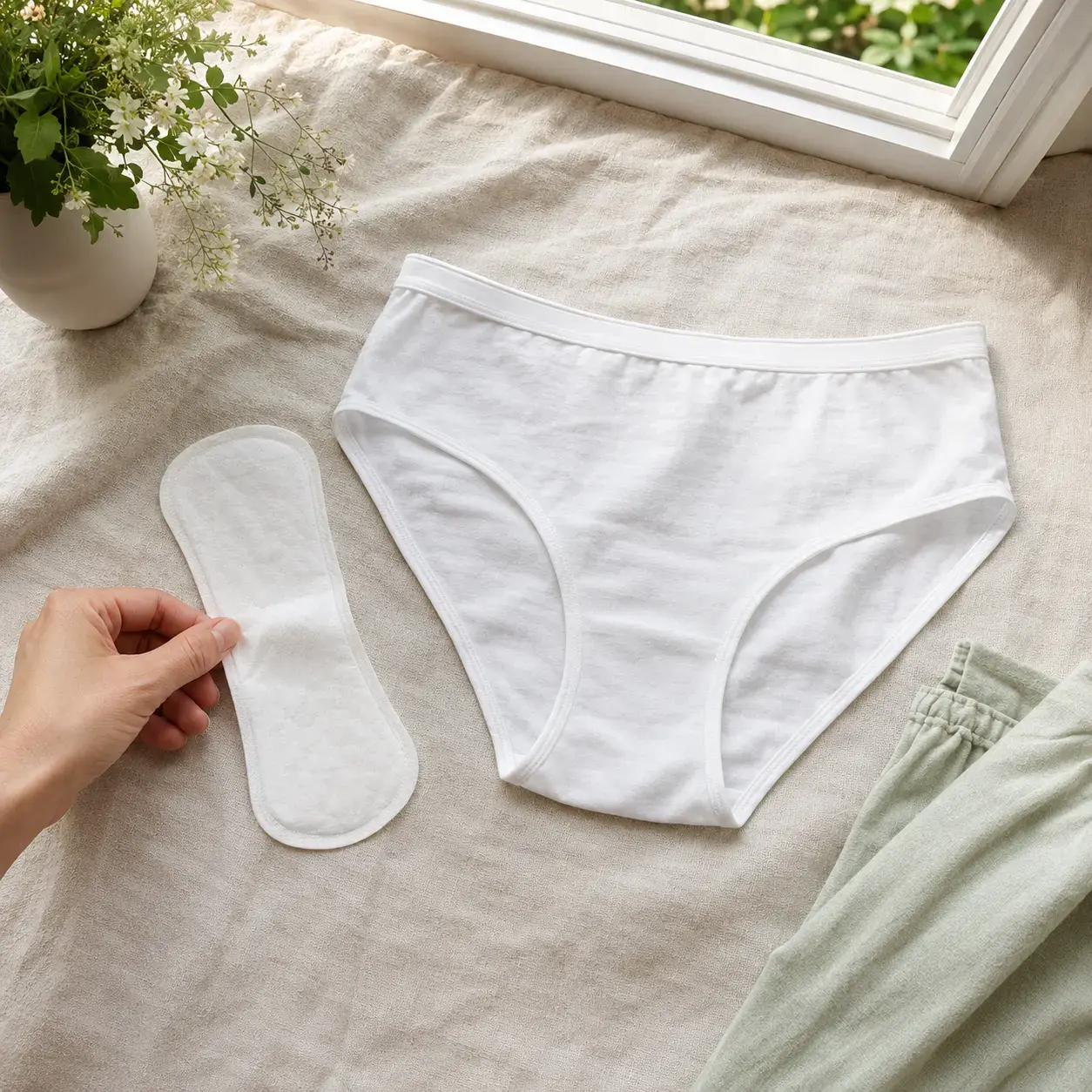
Panty liners can seem like a convenient everyday essential: “just in case,” “for freshness,” or “to keep underwear clean.” Many women start wearing them as routinely as underwear. However, daily use can change the conditions around the vulva and mucous membranes, which have their own protective barrier and natural microbiota.
The main issue is warmth and moisture. A panty liner can reduce ventilation and retain moisture, creating a warm, humid environment. This may make the skin more prone to irritation, redness, itching, discomfort or a feeling of dampness. For some women, especially those already prone to irritation or recurrent vaginal symptoms, prolonged use may contribute to discomfort.
Another factor is contact irritation. Panty liners contain different materials, adhesives and sometimes fragrances. Even products labelled “breathable” or “hypoallergenic” can cause irritation when they remain in contact with sensitive skin for many hours. This may lead to burning, dryness, chafing or small skin cracks.
A common cycle can then develop: discomfort leads to more frequent washing, scented gels, wipes or antiseptics, which may further irritate the skin barrier.
Panty liners can also mask changes that deserve attention. If discharge becomes noticeably heavier, changes in colour or smell, or is accompanied by itching, burning or pain, a liner does not address the cause. These symptoms may be related to irritation, hormonal changes, infection or other conditions that should be assessed individually.
What I recommend:
Vaginal discharge can change throughout the menstrual cycle, and this is often normal. The most useful comparison is not with someone else, but with what is usual for you. The goal is not “sterility,” but noticing when something has changed and responding to it with care.
The main issue is warmth and moisture. A panty liner can reduce ventilation and retain moisture, creating a warm, humid environment. This may make the skin more prone to irritation, redness, itching, discomfort or a feeling of dampness. For some women, especially those already prone to irritation or recurrent vaginal symptoms, prolonged use may contribute to discomfort.
Another factor is contact irritation. Panty liners contain different materials, adhesives and sometimes fragrances. Even products labelled “breathable” or “hypoallergenic” can cause irritation when they remain in contact with sensitive skin for many hours. This may lead to burning, dryness, chafing or small skin cracks.
A common cycle can then develop: discomfort leads to more frequent washing, scented gels, wipes or antiseptics, which may further irritate the skin barrier.
Panty liners can also mask changes that deserve attention. If discharge becomes noticeably heavier, changes in colour or smell, or is accompanied by itching, burning or pain, a liner does not address the cause. These symptoms may be related to irritation, hormonal changes, infection or other conditions that should be assessed individually.
What I recommend:
- Avoid wearing panty liners continuously every day when they are not necessary.
- Choose breathable underwear, ideally cotton or with a cotton gusset.
- Avoid very tight synthetic clothing that increases heat and moisture.
- If you need a liner, choose an unscented option and change it regularly.
- Do not use panty liners to manage persistent discharge, itching, burning or unpleasant odour—consult a gynaecologist instead.
Vaginal discharge can change throughout the menstrual cycle, and this is often normal. The most useful comparison is not with someone else, but with what is usual for you. The goal is not “sterility,” but noticing when something has changed and responding to it with care.